

On 15 September 2026, Neovivum and its partners submitted GLIOTWIN, a new proposal that addresses one of the most difficult problems in brain cancer: the disease clinicians need to treat is not always the disease they can see.
The project focuses on high-grade gliomas (HGGs), specifically adult IDH-wildtype glioblastoma and paediatric-type diffuse high-grade glioma entities (as classified under WHO CNS5).
At the centre of GLIOTWIN are two persistent oncology blind spots; the invisible margin and the invisible onset of the tumour.
When “completely removed” does not mean the disease is gone
In patients with HGG, surgery is followed by imaging to determine how much of the visible tumour has been removed. Unfortunately, relapse is common, even after post-operative scans show complete removal.
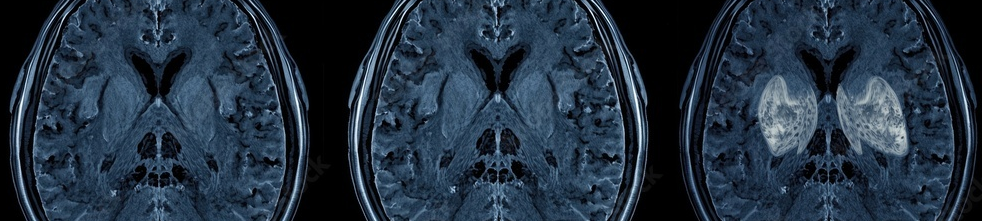
The problem is that an MRI image of a tumour often does not represent the full biological extent of the disease.
Glioma cells can infiltrate surrounding brain tissue beyond the abnormalities detectable on conventional imaging, and seemingly normal tissue may, in fact, contain dispersed tumour cells or biological conditions that support further progression.
This is oncology’s first blind spot: the invisible margin.
The second is the invisible onset: by the time a tumour becomes detectable, the biological processes that produced it may have been developing for years. The transition from a mutated cell to an established malignant tumour remains difficult to reconstruct from a single clinical snapshot.
GLIOTWIN is designed to address both these issues.
Why high-grade glioma is so difficult to treat
HGGs are highly heterogeneous cancers. Different regions of the same tumour can contain different cellular states, molecular characteristics, and microenvironments. Tumour cells interact with immune cells, extracellular matrix, blood vessels and surrounding brain tissue, while simultaneously evolving under the selective pressure caused by treatment.
Another issue is that adult glioblastoma and paediatric high-grade gliomas cannot be treated as versions of the same disease occurring at different ages. Paediatric tumours arise in a developing brain and include biologically distinct entities, which creates different clinical and modelling challenges.
For that reason, GLIOTWIN proposes to look beyond the tumour as a single mass and instead model it as a dynamic system changing across space and time.

Building a glioma Virtual Human Twin
At the technical core of GLIOTWIN is Glio5X, a proposed five-layer Virtual Human Twin platform.
Glio5X integrates imaging, pathology, molecular and genomic analyses, single-cell profiles, tumour microenvironment measurements, tissue mechanics, experimental models and longitudinal clinical observations across five interacting layers:
Layer 1 – Molecular and cellular state
This layer represents the molecular and cellular state heterogeneity, with cell-cell interactions behind it, across anatomical regions and over time, structured differently for adult and paediatric populations.
Layer 2 – Tumour microenvironment and barrier biology
It captures the environment surrounding the tumour, including extracellular matrix, immune context, tissue stiffness, oxygen and nutrient gradients, and the blood-brain and blood-tumour barriers.
Layer 3 – Invasion dynamics
Rather than assuming a clear border between tumour and healthy brain, this layer models how glioma spreads through tissue and how patterns of invasion can change over time.
Layer 4 – Normal brain and function
The tumour cannot be considered independently from the brain it is invading. The 4th layer incorporates functional regions, white-matter architecture, and the developmental stage that modulate brain-tumour interaction.
Layer 5 – Whole-body physiology
The final layer connects the brain tumour with systemic factors such as drug exposure, toxicity and organ function.
Three linked uses of the Glio5X platform
Glio5X is intended for research and clinical-workflow evaluation. It has three linked uses, with different outputs for clinicians, researchers, and patients and families.
Clinical use: supporting treatment planning
For adult patients, Glio5X is designed to estimate tumour infiltration beyond MRI-visible abnormalities, explore the biological and mechanical factors behind that pattern, compare resection or radiotherapy scenarios, and assess drug exposure across tumour regions. For paediatric high-grade gliomas, the focus is on feasibility and research, including spatial disease burden, exposure, entity-specific parameterisation, and determining which elements of the adult-derived framework can be transferred reliably. Glio5X is intended to support, not replace, clinical judgement: it reports predictions, scenarios and uncertainty, while treatment decisions remain with the multidisciplinary team.
Research use: testing mechanistic hypotheses.
Researchers use the same twin as an instrument for posing causal questions about tumour invasion, progression, treatment response and resistance. Rather than relying only on correlations between datasets, Glio5X combines predictions with mechanistic models that represent biological and physical processes underlying tumour behaviour. It can also explore predicted response to standard of care and the trade-off between expected benefit and expected functional and toxic cost; during the project, these analyses are exploratory and do not carry a clinical endpoint.
Public use: making predictions understandable.
Patients and families receive plain-language explanations of what the twin predicts and how confident it is.
How clinical evidence is built
Clinical evidence for Glio5X is to be developed in two stages:
- Retrospective phase – development and internal validation. Existing zoned-biopsy and imaging cohorts are used to develop and internally validate the platform, quantifying performance and domain shift across contributing centres.
- Prospective phase – testing against biopsy evidence. Locked model predictions are tested against neuronavigation-localised biopsy histology in patients undergoing already-indicated resection and benchmarked against a validated imaging-based comparator. In parallel, the paediatric arm assesses which components of the adult-derived architecture transfer to paediatric-type entities and which require entity-specific recalibration.
A multidisciplinary European consortium

GLIOTWIN brings together 18 partners from 8 European countries, combining expertise in clinical medicine, cancer research, computational modelling, technology development, patient engagement, regulation and research infrastructure.
The consortium is coordinated by Instituto de Salud Carlos III (ISCIII) in Spain, with Neovivum Technologies (NEO) serving as the project’s technical lead. The other partners are Inform Technologies (INFORM), University of Ioannina (UOI), Eindhoven University of Technology (TU/e), University of Cyprus – KIOS Research & Innovation (UCY-KIOS), E.P.O.S Iasis Research and Development Ltd (EPOS), Instituto de Investigación Sanitaria Aragón (IISA), Agencia Estatal CSIC-IQAC (CSIC), Consiglio Nazionale delle Ricerche (CNR), Politecnico di Milano (POLIMI), Hospital Universitario Río Hortega (HURH), Fundació Hospital Univ. Vall d’Hebron (VHIR), Association Européenne des Ligues contre le Cancer ASBL (ECL), Virtual Physiological Human Institute for Integrative Biomedical Research (VPH), Indaea OÜ (INDA), BioKerality Research Institute (BK) and IRCCS Istituto delle Scienze Neurologiche (IRCCS).
Together, the consortium covers the path from patient data and tissue samples to computational modelling, validation, regulatory considerations, open science and patient involvement.
GLIOTWIN was submitted under the EU Cancer Mission call Virtual Human Twin Models for Cancer Research. The call supports advanced, multiscale models designed to improve understanding of how cancer develops and progresses over time, support more personalised treatment approaches, and contribute reusable tools to European research infrastructures, including UNCAN.eu and the Advanced Virtual Human Twin Platform.
In line with this objective, models, datasets and other reusable outputs generated through GLIOTWIN will be made available through these European platforms, supporting the broader EU Virtual Human Twin initiative.